Planning a trip to Himachal Pradesh always starts with a dream: crisp mountain air, towering pine forests, and winding roads leading to remote valleys. But as soon as you start looking into logistics, you hit a classic traveler’s fork in the road.
Do you join a Fixed Group Departure for himachal trip —where everything from transport to stays is pre-booked, and you travel with a curated group—or do you strap on a backpack for a Solo Trip with complete control over every hour?
Both approaches offer wildly different experiences in the Western Himalayas. Here is how to decide which route fits your travel style best.
What is a Fixed Group Departure (FGD)?
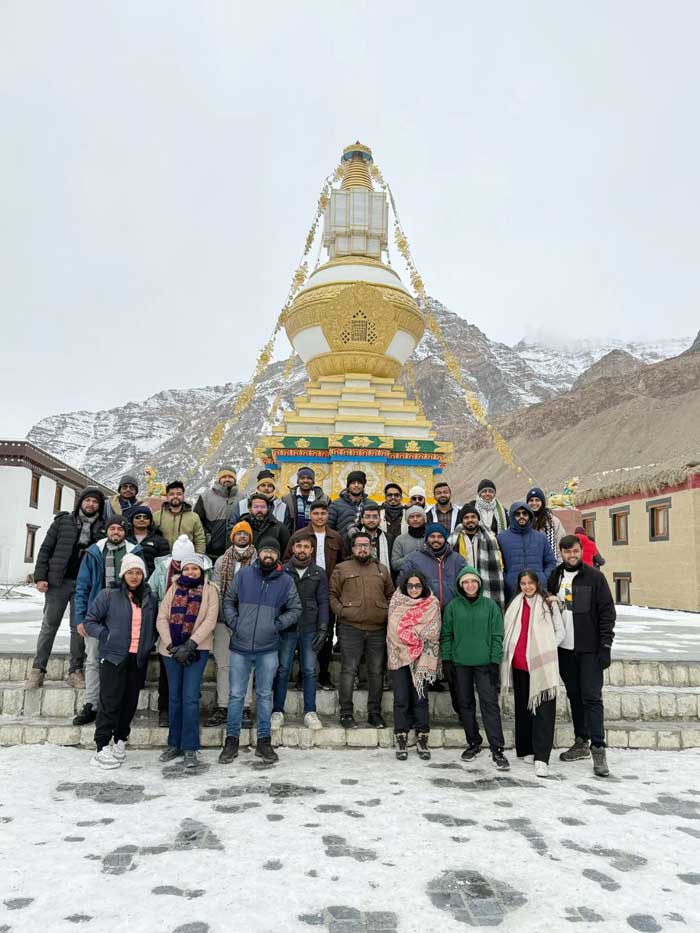
A Fixed Group Departure is a organized trip with set travel dates, a pre-planned itinerary, fixed pricing, and shared transport (usually tempo travellers or SUVs). You travel with like-minded individuals, usually led by a dedicated trip captain.
Pros of Fixed Group Departures
- Zero Logistics Stress: Mountain travel requires coordinating permits, local cabs, and unpredictable weather detours. On an FGD, the organizer handles driver accommodation, mountain permits (like Rohtang Pass), and hotel check-ins.
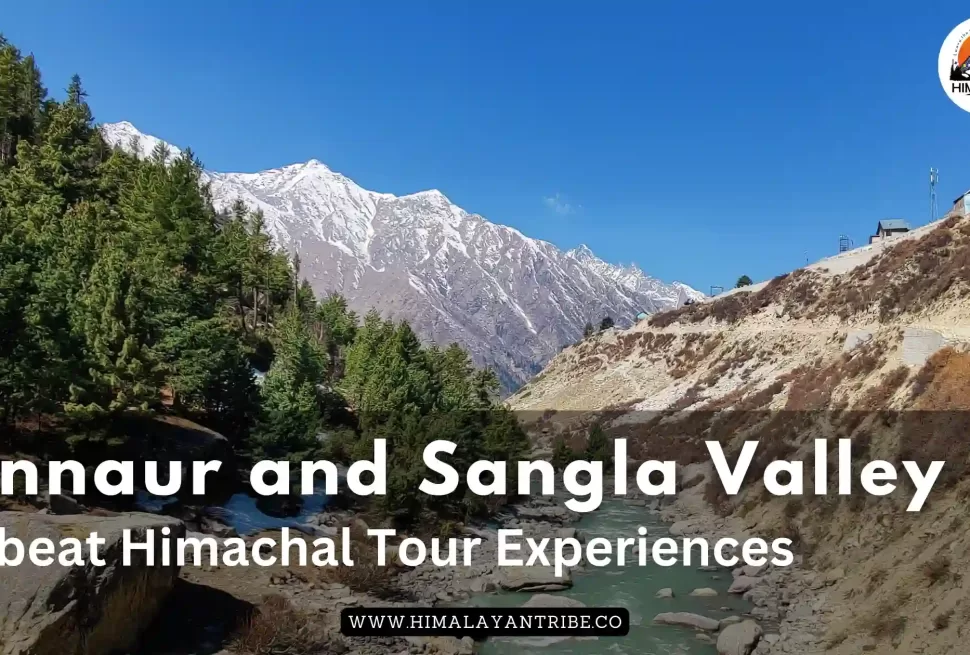
- Cost Efficiency in Remote Routes: Circuits like the Spiti Valley loop or Kinnaur are expensive to tackle alone because hiring a private 4×4 or SUV can run upwards of ₹35,000–₹50,000. An FGD splits those transport costs.
- Built-in Community: Ideal for solo travelers who want to travel safely without feeling lonely. You automatically get a group for evening bonfires and shared meals.
- Safety Net: On high-altitude trips where Acute Mountain Sickness (AMS) or road blockages are real risks, having an experienced team captain with oxygen cylinders and backup contacts is invaluable.
Cons of Fixed Group Departures
- Rigid Timelines: You leave when the group leaves. If you fall in love with a quiet café in Kalpa, you can’t extend your stay on a whim.
- Group Dynamics: You don’t choose your companions. Pace mismatches (e.g., fast hikers vs. slow photographers) can occasionally cause friction.
What is Solo Travel in Himachal?
Solo travel in Himachal Pradesh means navigating the state on your own terms—using local HRTC buses, staying in backpacker hostels (like Zostel or Hosteller), renting scooters, and building your day as you go.
Pros of Solo Travel
- Ultimate Freedom: Wake up at noon, stay an extra week in Dharamkot, or pivot from Parvati Valley to Bir Billing overnight. You own your time entirely.
- Deeper Local Connections: Traveling alone makes you much more approachable to locals, homestay hosts, and fellow independent backpackers in hostel common rooms.
- Budget Flexibility: You can strip expenses down to the bare minimum by taking HRTC ordinary buses and eating at local dhabas (roadside eateries).
- Self-Discovery: Navigating mountain transport and unexpected delays on your own builds confidence quickly.
Cons of Solo Travel
- Logistical Fatigue: You are responsible for every ticket, hostel booking, luggage transfer, and local cab negotiation.
- High Costs in Offbeat Sectors: Want to cross Kunzum Pass or explore Chitkul? Without shared transport, private cab fares for solo travelers can quickly break a budget.
Quick Comparison: Head-to-Head
| Feature | Fixed Group Departure | Solo Travel |
| Best For | Spiti Valley, Kinnaur, High-Altitude Treks | Shimla, Manali, Dharamshala, Bir, Kasol |
| Pace | Structured, fast-paced, clockwork | Flexible, slow, completely personal |
| Transport | Private Tempo Traveller / SUV included | HRTC buses, shared cabs, rented bikes |
| Social Environment | Instant friend group & team captain | Open-ended (hostels, cafes, locals) |
| Safety & Support | High (medical backup, local coordination) | Self-reliant (requires research & caution) |
Regional Matchmaker: Where Does Each Style Work Best?
The geography of Himachal Pradesh often determines the best way to travel.
1. Circuit Trips (Spiti, Kinnaur, Lahaul) -> Group Departures
High altitudes, rugged terrain, limited cell service, and long driving hours make these regions perfect for group trips. Renting an entire cab alone is costly, and local bus schedules through passes like Kunzum or Chandratal can be irregular.
2. Hub-and-Spoke Towns (Dharamkot, Bir, Old Manali, Jibhi) -> Solo Travel
These destinations feature strong hostel cultures, reliable mobile networks, frequent bus services, and vibrant café scenes. You can easily land in a hostel, meet people organically, and explore neighboring villages at your own speed.
Pro Tip: If you’re torn between both worlds, try a Hybrid Trip. Book a solo stay at a backpacker hostel in Old Manali or Bir for 3 days to work and relax, then join a 5-day fixed group departure to tackle the high-altitude circuit up to Spiti or Zanskar.