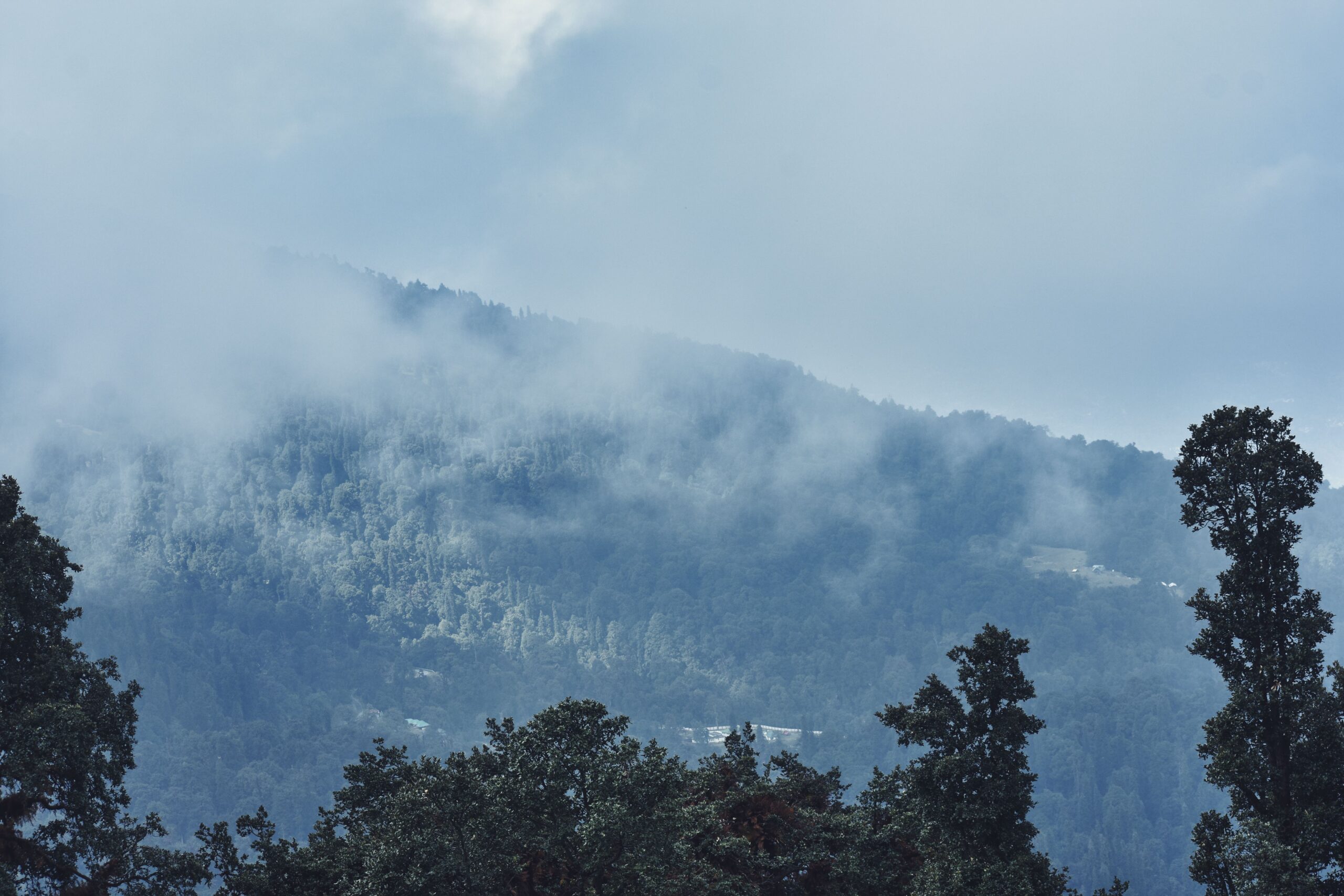
Trading the oppressive summer heat of the plains for a quiet, misty escape to the mountains sounds perfect. July completely transforms Manali into an emerald green paradise, but it also marks the official onset of the Southwest Monsoon.
If you are looking at travel itineraries or planning an independent mountain getaway, you’ve likely seen the weather reports and asked yourself the big question.
To clear the air, here are the absolute, unfiltered answers to the top 15 questions travelers have about safety, road conditions, and logistics in Manali this July.
Manali in July Q&A
Q1. Is it realistically safe to visit Manali in July, or should the trip be postponed entirely?
Yes, it is safe, but it is not a standard sightseeing holiday. If your goal is a relaxing, flexible vacation spent enjoying cozy cafes, lush green landscapes, and misty mountain views, July is incredibly beautiful and budget-friendly. However, if you are traveling with elderly family members, have a rigid, back-to-back schedule, or are terrified of driving in the rain, you should consider postponing until mid-September.
Q2. What is the actual state of the Chandigarh-Manali Highway (NH-21) when the July rains hit?
The highway infrastructure is broad, but the monsoon puts it to the test. During heavy spells, you can expect traffic to slow down significantly. The National Highways Authority of India (NHAI) and local teams are highly proactive, but rain delays due to clearing minor debris are a routine part of July travel.
Q3. Which specific stretches between Mandi and Manali are the most dangerous for landslides?
The most volatile section of the journey is the Mandi-Pandoh-Aut bottleneck. This stretch runs through a tight gorge where the hillsides are prone to mudslides and shooting stones (falling rocks). Once you cross the Aut Tunnel and enter the broader Kullu Valley, the road stability improves significantly all the way to Manali.
Q4. How do I track active landslides and road closures in real time?
Never rely on standard mapping apps for live mountain road conditions. Instead, check the official Twitter/X handles of the Himachal Pradesh Police (@himachalpolice) and the District Magistrate Kullu/Lahaul. Local travel community forums and WhatsApp ground-networks run by Manali hoteliers are also incredibly accurate for hour-by-hour updates.
Q5. How does the Beas River behave in July, and what are the strict safety rules regarding water levels?
The Beas River transforms from a gentle alpine stream into a roaring, high-velocity torrent fed by heavy monsoon runoff and upstream glacial melt.
The Golden Rule: Never, under any circumstances, walk down to the riverbed or stand on wet rocks for photos or reels. Water levels can surge exponentially within minutes due to sudden cloudbursts upstream or dam gate openings.
Q6. Is the Rohtang Pass road safe to traverse during heavy downpours?
The road to Rohtang Pass is entirely tarmac and heavily reinforced, making it physically safer than interior village roads. However, during heavy July rains, the pass gets completely socked in by extreme, near-zero visibility fog. While the road rarely washes out completely, the drive can become incredibly stressful, and the views at the top are often completely whited out by clouds.
Q7. What happens to the Atal Tunnel route during the monsoon?
The 9.02 km Atal Tunnel itself is completely weatherproof and remains open year-round. It serves as an incredible escape hatch; if Manali is experiencing a heavy downpour, you can drive through the tunnel and exit into the North Portal (Sissu/Lahaul), which sits partially in a rain-shadow zone and often experiences much lighter rain.
Q8. Are extreme weather events like cloudbursts common in Manali in July?
Cloudbursts are highly localized, unpredictable events that typically strike high-altitude, isolated ridges rather than the main commercial valley. While the main town of Manali features robust drainage, peripheral mountain streams (nallahs) can experience sudden flash floods. Staying away from remote, unpaved gorge tracks minimizes this risk entirely.
Q9. Is it safe to drive a private hatchback or sedan up to Old Manali or Solang during a rain spell?
The link roads climbing up to Old Manali and Solang Valley are steep. While a standard front-wheel-drive hatchback or sedan can easily handle the incline on a dry day, wet monsoon tires can slip on muddy curves or loose gravel. If you are not highly experienced with hill-climbing in the wet, use local 4×4 taxis to navigate the internal steep tracks.
Q10. Why are popular adventure sports like river rafting and paragliding officially banned in Manali this month?
The government of Himachal Pradesh enforces a strict, mandatory ban on paragliding and river rafting from mid-July to mid-September every year. This is a safety measure against turbulent wind currents and swelling river levels. If any local operator offers you these activities illegally during July, refuse immediately.
Q11. Which areas or valleys near Manali should be avoided due to flash flood risks?
During peak rainy weeks, limit your travel to the main valley axis. Avoid deep detours into the narrow Parvati Valley (past Kasol) or the interiors of Sainj Valley. These narrow, V-shaped valleys have steep walls and fast-flowing rivers that can face sudden logjams and flash floods far more easily than the wide Kullu trench.
Q12. If a massive landslide blocks the main highway, what are the alternate bypass routes?
If the primary NH-21 highway is blocked near Mandi, authorities typically divert light passenger vehicles through alternate mountain bypass routes, such as the Kataula-Bajaura road (connecting Mandi to Kullu via IIT Kamand). These routes are narrower and winding, but they ensure you are never permanently cut off from the plains.
Q13. How frequent are power outages and internet breakdowns in Manali during monsoon?
Minor power cuts lasting an hour or two are common when high winds knock down local branches onto overhead distribution lines. However, total blackouts are rare in major hubs. Most premium hotels and cafes in Old Manali and Mall Road are fully equipped with power backups and secondary internet lines.
Q14. Where is the safest place to book a stay in Manali during July?
Avoid booking budget homestays built directly on vertical, unreinforced dirt cliffs or right at the edge of the river bank. Instead, choose established properties in flatter pockets like Mall Road, Aleo, lower Vashisht, or the heritage zone of Naggar. These areas offer stable foundations and easy access to emergency services if needed.
Q15. What are the essential items that must be in your monsoon survival and safety kit?
1.Technical Rain Gear:Non-negotiable.
Pack a premium, windproof raincoat or a heavy-duty technical poncho. Traditional umbrellas are completely useless against wind-driven mountain downpours.
2.High-Grip Footwear:Prevention.
Sturdy waterproof trekking shoes or sandals with deep rubber lugs. Mountain moss and wet slate rock turn incredibly slick in July.
3.Power Backup:Electronics.
A fully charged 20,000mAh+ power bank kept in a sealed ziplock bag to protect your communication lines during temporary local power cuts.
4.Transit Medical Pouch:First Aid.
A 48-hour buffer of personal medications, motion sickness pills (essential for slow, water-logged detours), and water purification tablets.
The Final Verdict: July in Manali is a poetic experience meant for slow, cautious travel. Respect the rivers, keep a buffer day in your plan, and you’ll get to experience a vibrant, crowd-free side of the hills that summer tourists never get to see. If you want to experince a safe journey we advice to book your trip with someone who’s native to himachal so your manali trip from delhi stays safe and you’re focus will be only on enjoying the mountains.