July pulls two very different crowds toward Shimla. One half has heard “monsoon” and pictured washed-out roads and cancelled plans. The other half has heard “misty pine forests and empty Mall Road” and is already packing a raincoat. Both are a little bit right. Here’s a straight, question-by-question breakdown so you can plan a July trip that’s genuinely safe and enjoyable, not just hopeful.
What is the weather like in Shimla in July?
July sits right in the middle of the southwest monsoon, so expect cool days, humid air, and rain that comes and goes rather than a single grey, rainy month. Daytime highs typically hover between 22°C and 25°C, with nights cooling down to around 16–18°C, so it never feels hot the way the plains do. Shimla usually gets somewhere around 15–23 rainy days in July and roughly 350–450 mm of rainfall for the month, with humidity commonly sitting in the 75–85% range.
The India Meteorological Department’s Shimla centre issues a rolling 7-day city forecast, and it’s a genuinely useful habit to check it the morning you travel rather than relying on a generic monthly average. For context, IMD’s forecasts through early-to-mid July 2026 have repeatedly shown a pattern of afternoon thunderstorms with rain most days rather than continuous downpours — useful to know if you’re deciding between an early-morning drive or a midday one.
Good to know: IMD’s long-range outlook for the 2026 southwest monsoon season pegs Himachal Pradesh’s overall seasonal rainfall as likely below the long-period average for the state as a whole. That statewide number is a helpful backdrop, but it doesn’t rule out short, intense, localized spells — the kind that trigger flash floods or landslides in specific pockets even when the season “on average” is unremarkable. Don’t let a below-normal seasonal forecast talk you into skipping day-to-day checks.
Is Shimla safe to visit in July, overall?
Yes, for the great majority of travellers, Shimla in July is safe — it remains one of the most visited hill towns in India during exactly this month. The core town, Mall Road, the Ridge, and the well-known viewpoints are not disaster zones; they’re simply wetter and greener than in peak summer. The real risk in July isn’t the town itself, it’s the roads leading into and out of the hills, and specific vulnerable stretches during heavy-rain spells. Treat it as “generally safe with monsoon-specific precautions” rather than “risky.”
What tourist attractions are open and worth visiting in July?
Almost everything stays open; the experience just shifts from sunny lookout-point views to misty, atmospheric ones.
- The Ridge and Mall Road — the pedestrian heart of Shimla, at their most charming with a light drizzle and mist rolling over the colonial-era buildings.
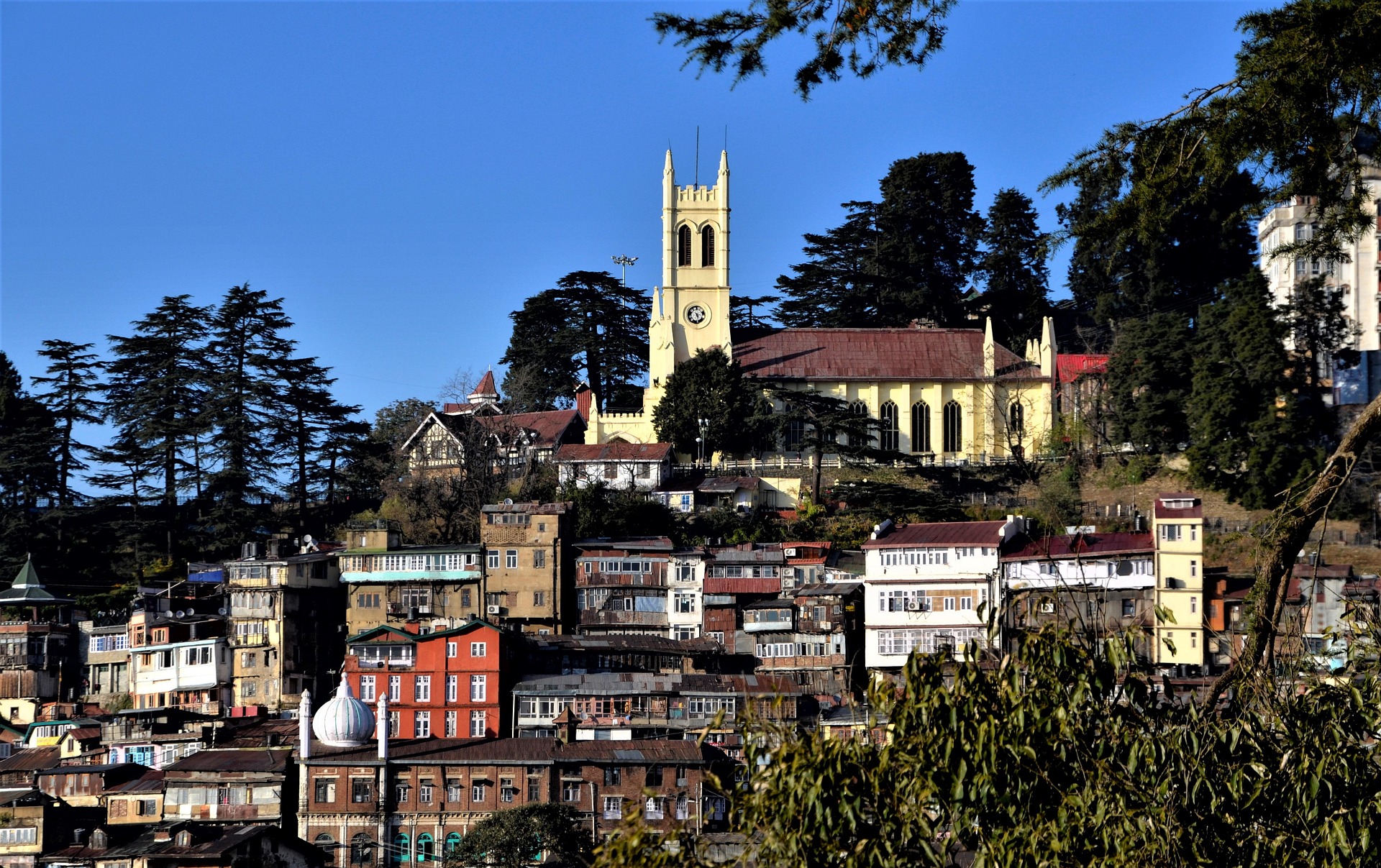
- Christ Church — the striking neo-Gothic church on the Ridge, a good indoor-adjacent stop when a shower rolls through.
- Jakhu Temple — reachable via the Jakhu Ropeway or a walk uphill; the surrounding forest looks especially lush in monsoon, though the path can get slippery.
- Viceregal Lodge (Indian Institute of Advanced Study) — a grand colonial building with well-kept gardens, largely an indoor-plus-covered-grounds visit.
- Chadwick Falls and Green Valley — these are genuinely at their best in July; the falls swell with monsoon runoff, though trails near them get muddy and the rocks near the water get slick.
- Kufri and Naldehra — day-trip favourites just outside the city; lovely in the rain, but check road conditions before heading out since these routes can see temporary blockages during heavy spells.
The trade-off for all of this greenery is straightforward: keep a flexible itinerary, build in buffer time, and treat any outdoor waterfall or forest-trail visit as weather-dependent rather than fixed.
What’s the parking situation in Shimla like in July?
Plan for this to be one of the more frustrating parts of the trip, honestly. Shimla’s Mall Road and the Ridge are a pedestrian-only, vehicle-free zone enforced by local police — driving or even riding an auto-rickshaw onto that stretch draws an on-the-spot fine, something enforced even against tourists unfamiliar with the rule. So the plan for any private vehicle is: park below the Mall, then walk up (or take the Lift, a short elevator connecting Cart Road to the Mall for a nominal fee).
The realistic parking options are the multi-level and open-air paid parking areas near the Lift and around Cart Road, run by the Shimla Municipal Corporation. Because Shimla has seen record tourist-vehicle inflows in recent peak months, with municipal and police data showing lakhs of vehicles entering the town in single months this year, these lots fill up fast on weekends and holidays. A few practical tips:
- Arrive early in the day; afternoon arrivals often mean circling for a parking spot.
- Consider parking a little further out (Boileauganj, Chhota Shimla) and taking a local taxi or the Lift in, rather than fighting for a spot in the core town.
- If you’re on a self-drive trip, ask your hotel in advance whether they offer parking — many mid-town hotels don’t have on-site space.
- Expect diversions: to manage congestion, Shimla Police has been routing traffic heading to Kufri, Mashobra, Naldehra, and upper Shimla through the Shoghi–Mehli bypass rather than through the city centre.
Are the roads and routes to Shimla safe in July?
This is the one area where July genuinely deserves extra caution, and it’s also the one where “safe” depends heavily on which route and which day.
The main access roads — the Chandigarh–Kalka–Shimla highway (NH-5) and the routes via Bilaspur/Mataur (NH-205/NH-5) — are well-travelled and maintained, but monsoon rain regularly causes localized landslides, falling trees, and temporary blockages on hill sections, including stretches beyond Shimla toward Kinnaur and Rampur. These closures are usually cleared within hours to a couple of days, but they can strand vehicles in the meantime, especially on narrow single-carriageway stretches.
Realistic precautions:
- Check road status the same day you travel, not the week before. Conditions change fast during active rain spells.
- Avoid night driving on hill roads during the monsoon — visibility, wet surfaces, and falling debris are all worse after dark.
- Keep a buffer day in your itinerary if you’re travelling onward from Shimla into Kinnaur, Spiti, or other interior routes; these see more frequent and longer closures than the main Shimla approach roads.
- Carry basics: a flashlight, some water and snacks, a power bank, and, per official advice, an offline map downloaded in advance, since network connectivity drops in landslide-prone stretches.
- Save the disaster helpline numbers before you travel (details below) — they’re the fastest way to get an update on a specific stretch of road, not just an app or forum guess.
What should I actually pack and prepare for a July trip?
- A light-to-medium rain jacket or poncho (umbrellas are less useful on windy hill roads)
- Waterproof or grippy-soled footwear — cobblestones and forest trails get slick
- A light woollen layer for evenings, since temperatures drop noticeably after sunset
- A dry bag or ziplock for electronics and documents
- Any personal medication, plus basic first-aid items, especially if you’re driving yourself
Who should reconsider a July visit?
July isn’t a good fit if your itinerary depends on multiple long, tightly-scheduled drives through remote hill sections (for example, Shimla-to-Spiti in one continuous loop), or if you’re not willing to build slack into your plans for weather delays. It’s a great fit if you enjoy quieter crowds, don’t mind rain, and are visiting Shimla town itself along with nearby, well-connected day trips.
Quick answer
Shimla in July is safe to visit for most travellers, provided you check the day-of weather and road status rather than assuming, park below the Mall and walk up, keep buffer time for onward hill routes, and treat any single-day route beyond the main highway as weather-dependent. The reward for that bit of planning is a genuinely beautiful, low-crowd version of Shimla that peak-season visitors never see.
Official sources for weather and road/travel safety updates
- IMD Meteorological Centre Shimla — city-specific 7-day forecasts, nowcasts, and Himachal Pradesh monsoon bulletins: https://mausam.imd.gov.in/shimla/
- IMD Southwest Monsoon Long Range Forecast/Outlook (Himachal Pradesh): available via https://mausam.imd.gov.in/shimla/
- Himachal Pradesh State Disaster Management Authority (HPSDMA) — monsoon advisories, disaster helplines (State: 1070, District: 1077): https://hpsdma.nic.in/
- District Administration Shimla — local advisories, parking information, disaster management updates: https://hpshimla.nic.in/
- National Highways Authority of India (NHAI) — highway condition and project updates for NH-5: https://nhai.gov.in/
Because road and weather conditions in the hills can change within hours during monsoon, always cross-check these official sources on the day of travel rather than relying on this article (or any single blog) as a final word. or you can rely to a local company for your shimla trip from delhi, as locals know the history of that location inside-out and will assist you in case on any inconvience.